-
Inter Miami vs Tigres UANL: Full Timeline and Match Breakdown (Leagues Cup 2025 Quarterfinals)
In one of the most electric nights of the 2025 Leagues Cup, Inter Miami CF edged Tigres UANL 2-1 in a tense quarterfinal showdown at Chase Stadium. This win punched Miami’s ticket to the semifinals and showed that even without Lionel Messi, this squad can deliver under pressure.
Match Overview
Competition: 2025 Leagues Cup – Quarterfinals
Date: August 20, 2025
Venue: Chase Stadium, Fort Lauderdale, Florida
Final Score: Inter Miami 2 — Tigres UANL 1
Attendance: Packed, electric atmosphereLineups & Game Plan
Inter Miami started with a strong mix of experience and grit:
- Goalkeeper: Óscar Ustari
- Defense: Ian Fray, Maximiliano Falcón, Gonzalo Luján, Jordi Alba
- Midfield: Captain Sergio Busquets, Yannick Bright
- Attack: Rodrigo De Paul, Tadeo Allende, Telasco Segovia
- Striker: Luis Suárez leading the line
Tigres UANL brought a seasoned side from Liga MX, ready to test Miami’s MLS mettle.
First Half Action: Miami Takes the Lead
23’ – Miami 1–0 Tigres (Suárez, Penalty)
Luis Suárez stepped up early, calmly converting a penalty after a handball in the box gave Miami the advantage. His veteran composure set the tone for Miami’s attacking intent. ESPNThe first half ended with Miami holding the edge, but Tigres were far from done.
Second Half Drama
67’ – Tigres 1–1 (Ángel Correa)
Tigres hit back when Ángel Correa found space inside the box and slotted home past Ustari. The Mexican side looked energized and suddenly back in contention.After the equalizer, both teams traded pressure, but Miami’s defense held strong.
Late-Game Heroics
89’ – Miami 2–1 Tigres (Suárez, Penalty)
With the clock ticking down, Miami earned another penalty after a handball in the box. Suarez didn’t blink, firing home to seal the victory and send the crowd into a frenzy.This clutch finish was classic Suarez: experience, nerves of steel, and a striker’s instinct for big moments.
Key Stats
Category Inter Miami Tigres UANL Possession ~40% ~60% Shots 14 13 Saves 1 2 Corners 4 3 Stats show Tigres held more of the ball, but Miami was sharper when it mattered.
Tactical Highlights
- Miami’s resilience stood out. Without Messi, they leaned on teamwork and Suarez’s veteran instincts.
- Tigres pushed hard for control but couldn’t find the finishing touch late.
- Defensive fouls leading to both penalties were pivotal — they swung momentum right back to Miami.
What This Win Means
With this result, Inter Miami advances to the Leagues Cup semifinals. They’ll face Orlando City FC, setting up a heated MLS rivalry clash next.
This match proved Miami’s depth and grit, reminding the world they’re not just Messi’s team — they’re a contender in their own right.
-
Major Cloudflare Outage Disrupts Global Internet Services
LONDON – A major outage at critical internet infrastructure company Cloudflare Inc. triggered widespread disruptions to websites, applications, and online platforms globally on Tuesday, highlighting the centralized nature of the modern web.
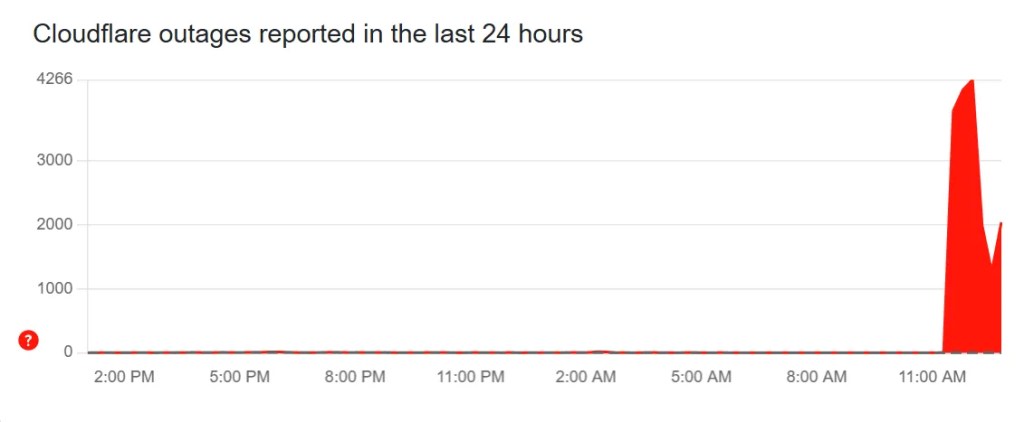
The incident, which commenced during peak business hours in Europe and affected services into the Americas, resulted in a cascade of connection failures. Users worldwide reported encountering “502 Bad Gateway” and “503 Service Unavailable” errors on a diverse range of sites, from popular social media platforms and news outlets to financial and e-commerce services.
Cloudflare, which provides content delivery network (CDN), DDoS mitigation, and other security services for millions of websites, acknowledged a “critical service disruption” on its official status page. The company’s initial investigation pointed to a failure within its core network architecture, though a precise technical cause was not immediately disclosed.
“The incident caused a broad impact across the Cloudflare product suite,” a company representative stated. “Our engineering teams were alerted and began executing our mitigation protocols immediately.”
The disruption underscored the internet’s reliance on a handful of key infrastructure providers. As a major traffic router, an outage at Cloudflare can prevent users from accessing any site that relies on its services, regardless of that site’s own operational status.
Following an hour of widespread disruption, Cloudflare issued a subsequent update confirming that its technicians had identified the root cause and were implementing a fix. The restoration of services began progressively across different regions and product lines.
The company also confirmed that specific services, including Cloudflare Access and the WARP VPN, had been successfully stabilized, with error rates returning to pre-incident levels. Full service restoration for all customers was reported within two hours of the initial outage.
A comprehensive post-mortem report detailing the technical cause and steps to prevent future occurrences is anticipated from Cloudflare within the coming days.
-
TechMatter Unveils New Brand Identity, Signaling Next Chapter of Growth and Innovation

GLENDALE, CALIFORNIA — NOVEMBER 2025: TechMatter, a leading provider of technology solutions specializing in software development, managed IT services, and digital transformation, today announced a complete rebranding initiative. This refreshed identity highlights the company’s expanded capabilities beyond healthcare and underscores its mission to deliver innovative, scalable solutions across diverse industries.
The rebrand goes beyond a new logo or design—it reflects TechMatter’s evolving vision and growing expertise. The updated brand embodies the company’s core principles of clarity, innovation, and progress, while supporting continued growth in areas such as enterprise technology, cloud infrastructure, compliance-focused services, and custom software development.
“Our new brand represents who we are today: agile, strategic, and results-driven,” said Mubashir Hanif, CEO of TechMatter. “While healthcare remains a key part of our portfolio, we’ve expanded our reach to serve organizations across multiple sectors, helping them streamline operations, boost performance, and achieve long-term growth. This new identity captures that broader vision.”
TechMatter’s rebranding comes amid ongoing expansion. Over the years, the company has enhanced its technical capabilities, diversified its services, and built a reputation for delivering reliable, high-performance technology solutions. The refreshed identity reinforces TechMatter’s role as a trusted partner for organizations seeking practical, scalable innovation.
A senior branding consultant leading the creative direction added, “TechMatter’s new look conveys confidence and global ambition. It reflects a company that masters complex technology while keeping solutions human-centered and results-focused. The updated brand feels modern, cohesive, and aligned with TechMatter’s growth trajectory.”
The updated branding will roll out across all digital platforms, communication channels, and customer touchpoints. Updated materials and resources are available now on TechMatter’s official website.
“As we enter this exciting new chapter,” Hanif added, “our commitment remains the same: to create technology that empowers organizations to work smarter, scale faster, and achieve measurable outcomes. This rebrand is an outward expression of that mission.”
TechMatter’s new identity reaffirms its dedication to staying ahead of industry trends and continuing to shape the future of technology. Built on innovation, collaboration, and trust, TechMatter remains focused on helping clients accelerate performance with solutions that truly make a difference.
About TechMatter
Founded in 2017 and based in Glendale, California, TechMatter is a technology solutions provider specializing in healthcare innovation, managed IT services, and enterprise software development. The company offers end-to-end solutions, including electronic health records, practice management platforms, custom enterprise software, revenue cycle management, and cloud infrastructure. Focused on performance, scalability, and user experience, TechMatter partners with organizations across industries to drive operational excellence and sustainable growth in a digital-first world.Media Contact:
marketing@techmatterglobal.com -
TechMatter Acquires StateDrives to Strengthen IT Infrastructure and Healthcare Innovation

GLENDALE, CA, UNITED STATES — November 3, 2025 — TechMatter, a leader in managed IT, healthTech, and software development, has officially acquired StateDrives, one of the USA’s top online platforms for IT hardware and networking solutions. The company was acquired from SpaceXsystems LLC for an undisclosed amount.
This move marks a major step in TechMatter’s growth strategy—expanding its infrastructure capabilities and reinforcing its mission to build secure, scalable, and high-performance systems for healthcare and enterprise clients.
“This acquisition is a key milestone for us,” said Mubashir Hanif, CEO of TechMatter. “StateDrives’ expertise in storage architecture and high-speed systems strengthens our ability to deliver faster, more reliable managed IT solutions. As data demands and compliance standards rise, this partnership positions us to stay ahead.”
Why This Move Matters
1. Stronger Infrastructure
StateDrives’ advanced storage technology enhances TechMatter’s capacity to manage large-scale data systems—critical for healthcare analytics, RCM operations, and electronic health records.2. Greater Scalability & Reliability
Full control over hardware infrastructure allows TechMatter to boost uptime and performance for mission-critical healthcare apps.3. Enhanced Security & Compliance
Bringing StateDrives in-house improves encryption, redundancy, and HIPAA-compliant data handling.4. Faster Innovation
Combined teams will drive faster development of next-gen solutions in cloud-based RCM, AI, and enterprise automation.What Clients Can Expect
Healthcare clients can expect improved performance, faster data access, and more reliable systems. TechMatter plans to introduce new service tiers built on StateDrives’ infrastructure, supporting real-time analytics, large EHR migrations, and automation features.
Leadership & Future Plans
StateDrives will continue under its existing leadership while collaborating closely with TechMatter’s product and engineering teams to ensure a smooth transition and continuous innovation.
TechMatter also plans to invest in upgrading StateDrives’ infrastructure and fully integrating its systems into TechMatter’s main offerings. New enterprise-grade packages are expected by mid-2026 to meet the evolving needs of healthcare providers.
“We’re not just scaling—we’re predicting what’s next,” added Hanif. “With StateDrives, our infrastructure becomes a strategic advantage.”
About TechMatter
Founded in 2017 and based in Glendale, California, TechMatter is a global healthcare technology and managed IT company offering advanced solutions in enterprise software, revenue cycle management (RCM), and AI automation. The company’s mission is to modernize healthcare and IT operations across the United States.
About StateDrives
StateDrives, previously part of Spacexsystem LLC, is an IT hardware and data storage provider specializing in high-performance, enterprise-grade systems, secure frameworks, and cloud integration solutions.
-
What Is Modifier 25 in Medical Billing? A Simple Guide
If you work in medical billing or healthcare, you’ve probably heard people talk about Modifier 25, sometimes with confusion, sometimes with frustration. It’s one of those tiny billing codes that can make or break a claim. Let’s unpack what it actually means, when you should use it, and how to avoid the mistakes that often lead to denials.
What Exactly Is Modifier 25?
Modifier 25 is a CPT modifier used to indicate that a significant, separately identifiable evaluation and management (E/M) service was performed on the same day as another procedure or service by the same provider.
In simple words;
If a provider performs a minor procedure (like removing a mole) and also conducts a detailed evaluation of a patient’s unrelated issue (like discussing blood pressure management) during the same visit, you’d attach Modifier 25 to the E/M code.This tells the payer,
“Hey, this wasn’t just part of the procedure, there was a separate, billable E/M service too.”
Why Modifier 25 Exists
Without this modifier, the E/M part would usually be bundled into the procedure and not paid separately. Modifier 25 lets you fairly bill for both when there’s legitimate additional work.
It helps clarify that:
- The E/M service was above and beyond the usual pre- and post-procedure care.
- Both services were medically necessary and properly documented.
Think of it as your way to justify,
“Yes, I did extra work, and here’s why it deserves separate payment.”
When to Use Modifier 25
You can use Modifier 25 only with E/M codes (99202–99215) and on the same date as a procedure that has a global period of 0 or 10 days, these are considered minor procedures.
Here are a few examples:
- Example 1:
A patient visits for a sore throat. During the visit, the doctor notices a suspicious skin lesion and decides to remove it.- E/M Code: 99213
- Procedure Code: 11401 (skin lesion removal)
- Modifier: 25 added to 99213
- Example 2:
A patient comes in for a blood pressure check but also needs an ear irrigation for wax removal.- E/M Code: 99212
- Procedure Code: 69210 (ear wax removal)
- Modifier 25 goes on 99212
In both cases, the E/M service wasn’t automatically part of the procedure, it was distinct.
When Not to Use Modifier 25
A lot of claim denials happen because Modifier 25 was used incorrectly. Here are common mistakes to avoid:
- Don’t use it just because you did an exam. The exam must be significant and separately identifiable from the procedure.
- Don’t use it for unrelated services on different days. That’s what Modifier 59 or a different E/M code would handle.
- Don’t use it for major surgeries. Modifier 25 is only for minor procedures. Major surgeries (90-day global period) follow different rules.
- Don’t forget documentation. Your notes should clearly show why both services were necessary.
If the documentation doesn’t justify it, payers can deny or even recoup payments during audits.
Documentation Tips for Modifier 25
Payers love documentation. To defend your use of Modifier 25, make sure your provider notes include:
- The reason for the E/M service (chief complaint or new issue)
- Separate assessment and plan for that issue
- Clear procedure documentation
- Evidence that the E/M service required additional time, effort, and medical decision-making
Example:
“Patient presents with chest discomfort and requests evaluation for hypertension management. During exam, wart noted on right hand; removed using liquid nitrogen.”
That’s enough to justify both an E/M service and a minor procedure, Modifier 25 applies.
Common Payer Issues with Modifier 25
Even when used correctly, Modifier 25 can trigger audits or denials. That’s because it’s one of the most overused modifiers in medical billing. Payers look for patterns like:
- High frequency of Modifier 25 use
- Lack of clear documentation in charts
- Use with procedures that typically include minimal E/M work
If payers flag your claims, it doesn’t always mean you’re wrong—but it does mean they’ll expect proof.
Final Thoughts
Modifier 25 might look small, but it carries a big responsibility. It’s not a “get paid twice” trick, it’s a legitimate billing tool to reflect real, separate medical work. Used correctly, it ensures fair reimbursement. Used carelessly, it can lead to denials, audits, and headaches.
So, next time you’re coding a visit with a minor procedure, pause for a second and ask:
“Was the E/M service significant and separate?”If yes, add Modifier 25 with confidence, and make sure your documentation has your back.
-
How TechMatter is Changing the Way Healthcare Works
Healthcare used to move at a slow, frustrating pace. Paper charts, endless phone calls, and systems that didn’t talk to each other. Fast-forward to today, and things look very different. Technology is finally catching up with the real needs of doctors, clinics, and patients. The healthcare industry, which was once hesitant to change, is now becoming one of the most tech-driven sectors in the world.
What’s interesting is that healthcare tech isn’t just about fancy machines or hospital gadgets anymore. It’s about data, access, and connection. The focus has shifted from treating illness to managing health—and technology is the backbone of that shift.
From Paper to Platforms
For decades, healthcare relied on human memory and physical files. A doctor’s notes stayed locked in a folder, and a patient’s history moved as slowly as their paperwork. Now, digital health platforms make it possible to pull up an entire patient record with a few clicks. Electronic Health Records (EHRs) have turned chaotic paperwork into organized, searchable data.
This change might seem simple, but it’s huge. It means doctors can make decisions faster. It means a specialist in another city can instantly review a patient’s scans. And it means patients no longer have to repeat their medical story every time they visit a new clinic.
Smarter Systems, Healthier Outcomes
Healthcare tech isn’t just digitizing old systems—it’s improving how care actually happens. Artificial Intelligence (AI) is helping detect diseases earlier. Machine learning models can scan images, spot irregularities, and even predict potential health risks before symptoms appear.
Hospitals are using predictive analytics to plan staffing, manage resources, and prevent burnout. Remote monitoring tools track patient vitals in real time, alerting doctors before an emergency happens. And telehealth has turned smartphones into virtual clinics, giving people access to healthcare no matter where they live.
This new model of care is proactive, not reactive. Instead of waiting for something to go wrong, technology helps keep things from going wrong in the first place.
The Hidden Power of Automation
Behind every patient visit, there’s a mountain of administrative work—billing, claims, eligibility checks, and follow-ups. For a long time, this part of healthcare got ignored, even though it directly affects how fast patients get care and how soon providers get paid.
Automation is quietly fixing that. By connecting billing systems, automating claim submissions, and verifying insurance in real time, technology is removing the bottlenecks that once slowed everything down. This means fewer denied claims, faster payments, and more time for doctors to focus on patients instead of paperwork.
The real impact isn’t just in numbers—it’s in relief. Staff burnout goes down. Efficiency goes up. Patients get smoother experiences. Everyone wins.
One Step Further: Data That Heals
Data might be the most underrated part of modern healthcare. Every click, scan, and lab result adds to a story that helps providers see the full picture. When analyzed correctly, this data can predict patterns—like which treatments work best for specific conditions or which patients are most at risk of complications.
Healthcare tech companies are building systems that make this data useful and actionable. Instead of drowning in information, hospitals can turn it into insight. This helps not just in individual patient care, but in improving public health at a larger scale.
Where TechMatter Fits In
Among the companies driving this digital shift is TechMatter, a global IT solutions provider working deeply in the healthcare sector. The company focuses on creating smart, connected systems that streamline how healthcare operations run. From automating repetitive administrative tasks to building integrated digital platforms, TechMatter helps healthcare organizations cut down on inefficiencies and improve patient experience. Their work reflects a broader industry goal—making healthcare simpler, faster, and more data-driven.
TechMatter’s subsidiary, RCM Matter, specializes in medical billing services and recently launched CureAR, a next-gen medical billing software designed to simplify claims and revenue management. To further expand its footprint in healthcare technology, TechMatter also acquired DoctorPapers in July, strengthening its position in digital health solutions and healthcare automation.
The Human Side of Health Tech
It’s easy to talk about technology and forget the people behind it. But the real success of healthcare tech lies in how it helps humans—both doctors and patients.
Digital systems save doctors from burnout by reducing manual tasks. Telehealth brings comfort to patients who can’t travel. AI tools give pathologists more confidence in their diagnosis. The point of all this tech isn’t to replace human care—it’s to amplify it.
The more the system takes care of itself, the more space there is for compassion.
The Future Looks Predictive
Healthcare tech is heading toward a future where systems won’t just respond to problems—they’ll anticipate them. Imagine your smartwatch flagging a possible heart condition before you even feel symptoms, or an app warning a hospital of a potential infection surge days before it happens.
This kind of predictive, data-powered care will completely change how we think about health. It’s not science fiction anymore—it’s already starting. And companies like TechMatter are part of the reason it’s moving from concept to reality.
Final Thoughts
Healthcare is no longer just about stethoscopes and hospital rooms. It’s about networks, data, and intelligent systems quietly running in the background. The goal isn’t to replace doctors with machines—it’s to make sure doctors have the tools they need to do their jobs better.
Technology can’t cure empathy, but it can give healthcare professionals more time to show it. And that’s what real progress looks like.
-
The best car loans for bad credit in October 2025

If your credit stinks right now you can still get a car loan. Start with credit unions and aggregators, compare offers, and avoid buy-here-pay-here lots. Top picks this October 2025 include aggregators like Autopay and LendingTree, retail lenders such as CarMax and Ally, and local credit unions that offer member-friendly rates. Always prequalify and aim for a bigger down payment to lower your APR.
Why this matters
Car loans for bad credit are not all the same. Some lenders charge sky-high rates. Others will work with you and offer reasonable terms if you show stable income or a down payment. Shopping around can save you thousands. Experts say comparison shopping matters more when your credit score is low.
How I picked these lenders
I focused on reputable sources that update often. I looked for:
- Lenders that accept low scores or thin files.
- Aggregators that let you compare multiple offers without hard pulls.
- Credit unions and community banks that often beat big lenders for subprime borrowers.
Sources used include Investopedia, LendingTree, Bankrate, NerdWallet, and U.S. News.
Also Read: https://curewire.co/topics/what-is-gaymetu-e-2026/
Best options for bad credit — short list (October 2025)
1. Autopay — Best aggregator for speed and choice
Autopay connects you with many lenders fast. It can be great if you want quick prequalifications and multiple offers to compare. Aggregators like this help you avoid taking the first expensive offer.
2. CarMax — Best for very low credit and transparency
CarMax is known for approving buyers with low scores and for clear pricing. Their financing can be a decent fit if you want a straightforward buying process and a used car with inspection history.
3. Capital One Auto Navigator — Easy prequalify for bad credit
Capital One’s Auto Navigator shows prequalified offers and dealer listings. It does not guarantee the lowest APR, but prequalifying helps you see likely rates without a hard credit hit. Many people with fair to poor credit get offers through this platform.
4. Credit unions — Best chance for the lowest rate overall
Local credit unions often offer lower APRs than big banks for subprime borrowers. They are member-focused and can be flexible if you have steady income. Examples in 2025 show competitive rates and member discounts. Always check your local credit unions.
5. Ally and OpenRoad Lending — Good direct-lender options
Ally is often recommended for overall fair rates and flexible terms. OpenRoad and similar specialty lenders can approve lower scores but watch the final APR and fees. Use these if you did not get offers elsewhere.
6. Auto Credit Express and myAutoLoan — For hard-to-place loans
These are lead generators and broker networks that connect you to subprime lenders. They are useful if banks and credit unions say no. Expect higher APR ranges, so compare closely.
A quick reality check on rates (October 2025)
Average rates for bad credit remain high. For example, used car loans for scores in the 451 to 599 range have averaged roughly 20 percent APR in recent data. That means monthly payments and total interest can be steep. Plan accordingly and try to reduce the principal or shorten the term when possible.
How to get the best deal when your credit is low
Simple, actionable steps you can do right now:
- Prequalify everywhere
Do soft pull prequals from aggregators and big lenders. This shows likely rates without hurting your score. - Hit up credit unions first
If you can join one, apply there. They often beat dealer financing even for low scores. - Bring a down payment
Even a small down payment lowers the APR you are offered and reduces negative equity. Aim for at least 10 percent if you can. - Shorter term if affordable
A 36 to 48 month loan may have higher monthly payments, but you will pay far less interest than a 72 month loan. - Get a co-signer if possible
A responsible co-signer with good credit can drop your APR a lot. But remember co-signers are on the hook if you miss payments. - Avoid buy-here-pay-here unless last resort
Dealer in-house financing can be easier to get but often has predatory rates and bad terms. Explore other options first. - Check total cost not just monthly payment
Dealers can stretch a loan to make monthly payments look small. That increases total interest. Always compare total interest paid.
What to watch for in the contract
Be careful with these red flags:
- Prepayment penalties.
- Huge origination or documentation fees.
- Mandatory add-ons that raise the price.
- Negative equity rollovers where the dealer adds old loan balance to the new loan.
If anything looks shady, walk away.
How to improve your credit quickly (so you can refinance later)
You do not have to be stuck forever. These moves can help you refinance to a better loan down the road.
- Pay on time every month. Payment history is the biggest factor.
- Lower your credit card balances. Aim under 30 percent of limits.
- Fix errors on your credit report fast. Dispute mistakes with the bureaus.
- Keep old accounts open. Length of history helps.
- Re-check prequal rates in 6 to 12 months and refinance when your score improves.
Refinancing can cut your APR significantly once your score rebounds. Lenders like Ally, banks, and credit unions often offer refinance options when your credit gets better.
Sample comparison checklist to use when you shop
Use this quick checklist when comparing offers:
- Lender name and type (credit union, bank, dealer, aggregator)
- Loan amount and term in months
- APR and whether it is fixed
- Monthly payment and total interest paid over life of loan
- Fees and penalties listed in contract
- Prequalification needed yes or no
Fill this out for three to five offers before you sign.
Final takeaways
If you have bad credit, do not panic. You still have options. Start with credit unions and aggregators. Prequalify with multiple lenders. Avoid buy-here-pay-here unless you have no choice. Make a plan to improve your credit and refinance later. Doing these things can save you thousands in interest and give you better financial breathing room.
-
ICD-10 Codes for Skin Tags: Complete Guide

Skin tags, medically known as acrochordons, are harmless, small, soft skin growths that often appear on the neck, eyelids, underarms, groin, and other body folds. While they’re usually benign, proper documentation and coding are essential for accurate medical billing & coding, reimbursement, and patient records.
In this guide, you’ll learn:
- What skin tags are and why ICD-10 coding matters
- The correct ICD-10 codes used for skin tags and their removal
- Documentation and billing tips for coders and providers
- Common coding mistakes to avoid
What Are Skin Tags (Acrochordons)?
Skin tags are noncancerous skin growths that develop due to friction, hormonal changes, or metabolic conditions such as diabetes and obesity. They are typically flesh-colored or slightly darker and are connected to the skin by a thin stalk.
Although harmless, many patients choose to have them removed for cosmetic reasons or due to irritation caused by clothing or jewelry.
Read also: Voddler.co.uk – Your All-in-One Hub for Free Movies, Anime
Common characteristics include:
- Soft, small, and painless growths
- Frequently found on neck, armpits, under breasts, or eyelids
- More common in adults, especially those who are overweight or diabetic
Why ICD-10 Coding Matters for Skin Tags
Accurate ICD-10 coding is crucial because:
- It ensures correct documentation in patient medical records
- It supports medical necessity for procedures
- It helps avoid insurance denials for “cosmetic-only” removals
- It contributes to data accuracy in healthcare analytics
ICD-10 Codes for Skin Tags
There isn’t a specific, exclusive ICD-10 code labeled “skin tag.” Instead, coders use a few related codes depending on clinical context and documentation.
Below are the most relevant ICD-10 codes used for skin tags and related conditions:
Code Description When to Use L91.8 Other hypertrophic disorders of the skin Commonly used for benign overgrowths like skin tags L91.9 Hypertrophic disorder of skin, unspecified When documentation lacks specific details R22.9 Localized swelling, mass, and lump, unspecified For nonspecific descriptions such as “skin lump” or “small mass” D23.9 Other benign neoplasm of skin, unspecified When the provider describes a benign lesion without specific diagnosis Z48.00–Z48.02 Encounter for removal of sutures or post-surgical wound care Used postoperatively after skin tag removal Z41.1 Encounter for cosmetic surgery Used if the skin tag removal is purely cosmetic Primary Choice:
In most cases, L91.8 — Other Hypertrophic Disorders of the Skin is the best ICD-10 code for skin tags (acrochordons).Coding Skin Tag Removal Procedures
When a skin tag is removed, the coder must document:
- Diagnosis code – Skin tag (L91.8 or appropriate variant)
- Procedure code (CPT/HCPCS) – For excision or destruction
- Number and site of lesions – e.g., “five skin tags removed from neck”
- Reason for removal – Cosmetic, irritation, bleeding, etc.
- Follow-up visit (Z-code) – For post-removal care
Example:
Patient presents with multiple irritated skin tags under both arms. Physician performs removal via cryotherapy.
ICD-10: L91.8
CPT: 11200 (Removal of skin tags, up to 15 lesions)When to Use a Different ICD-10 Code
Sometimes, documentation may describe the lesion differently or show comorbid conditions. You may need to use other codes, such as:
- D22.x — If a mole or pigmented lesion is suspected
- L72.0 — For epidermal cysts mistaken for tags
- E11.9 — Diabetes mellitus (if skin tags are related to insulin resistance)
- L83 — Acanthosis nigricans, a related condition often seen in obese patients
Always use the most specific code available based on the clinical note.
Common Documentation Mistakes
Avoid these frequent errors when coding for skin tags:
- Lack of specificity — “Skin lesion” is too vague
- Cosmetic assumption — Not clarifying medical necessity
- Omitting site or number — Especially when multiple tags are treated
- Incorrect procedural pairing — Using non-matching CPT and ICD-10 codes
- Failure to link symptoms — Such as irritation or bleeding
Example Coding Scenarios
Scenario Diagnosis Description Suggested ICD-10 Code(s) Single irritated tag on eyelid “Painful, inflamed acrochordon on right upper eyelid” L91.8 + R22.9 Multiple tags on neck “Several benign skin tags on anterior neck, causing friction” L91.8 Removal for cosmetic reason “Patient requests removal of neck skin tags for cosmetic appearance” L91.8 + Z41.1 Post-operative follow-up “Return visit after cryotherapy for skin tag removal” Z48.02 Medical Necessity and Insurance Coverage
Most insurance providers do not cover cosmetic procedures, including skin tag removal for appearance only.
However, if the removal is medically necessary — due to irritation, bleeding, or infection — documentation must clearly state the reason.Tip:
Always include the following in the chart note:- “Tag causing irritation or bleeding”
- “Interfering with shaving or vision”
- “Bleeding due to friction”
This ensures proper claim approval.
Best Practices for Coders and Billers
- Verify the provider’s documentation before assigning a code
- Always specify site and laterality when available
- Include procedure and diagnosis linkage in claims
- Stay updated with annual ICD-10-CM revisions
- Use Z-codes appropriately for follow-ups and aftercare
Conclusion
While skin tags are benign and often harmless, accurate ICD-10 coding is essential for correct billing and record-keeping.
The most commonly used code is L91.8 (Other hypertrophic disorders of the skin), but coders should always review documentation to determine the most accurate diagnosis.Proper use of ICD-10 codes helps avoid claim rejections, ensures compliance, and maintains data integrity — whether the procedure is cosmetic or medically necessary.
-
How the Government Shutdown Affects U.S. Healthcare: IDR Process Continues, but Delays Expected

The ongoing government shutdown, sparked by stalled negotiations between Republicans and Democrats over federal funding, is shaking up several sectors, including healthcare. Despite the disruption, the Centers for Medicare & Medicaid Services (CMS) confirmed that the Independent Dispute Resolution (IDR) process for out-of-network billing disputes remains active, at least for now.
According to a recent CMS notice, healthcare providers and insurers can still file disputes through the online IDR portal, and certified mediators will continue processing them. However, CMS cautioned that if the shutdown continues for an extended period, response times and reviews may face significant delays.
The IDR system, launched in 2022 under the No Surprises Act, has long been criticized for its large backlog. CMS recently reported progress, stating that dispute resolutions are now being completed faster than new ones are submitted. The agency attributed this improvement to automation upgrades, new guidance materials, and enhanced collaboration with mediators.
Meanwhile, political discussions around the shutdown remain stalled. As of October 7, neither party has made progress toward reopening the government or extending Affordable Care Act (ACA) premium tax credits, one of the key issues in the funding standoff.
ACA Tax Credit Extension Gains Bipartisan Support
A new KFF Health Tracking Poll revealed that most Americans favor extending the enhanced ACA premium tax credits. Among 1,334 adults surveyed, 78% supported continuing the subsidies, including 59% of Republicans, 82% of independents, and 92% of Democrats. However, nearly 60% of marketplace enrollees said they were unaware of the upcoming expiration.
KFF CEO Drew Altman warned that many consumers could face sticker shock when premiums rise in November, adding that 42% of respondents would consider dropping coverage if rates double.
CMS Ends Expanded Telehealth Flexibilities
On the first day of the shutdown, CMS released updated guidance confirming the expiration of pandemic-era telehealth waivers for Medicare beneficiaries. While providers can continue submitting claims, CMS has instructed contractors to hold telehealth payments for 10 business days.
Under pre-pandemic rules, telehealth visits must occur at rural facilities, excluding most urban patients. Audio-only visits are also no longer covered. Some telehealth options remain, such as those for dialysis and certain Accountable Care Organization (ACO) participants.
Industry groups including the Alliance for Connected Care and the American Telemedicine Association praised CMS for temporarily holding claims, saying it may help reduce administrative chaos during the funding lapse.
What’s Still Operating at HHS
According to the Department of Healthcare and Human Services (HHS) contingency plan, 41% of staff, over 32,000 employees, will be furloughed during the shutdown. Critical services such as Medicare, Medicaid, and fraud prevention programs will continue. The National Institutes of Health (NIH) will maintain direct medical care for patients but suspend most research activities. The Centers for Disease Control and Prevention (CDC) will limit public communications.
The Food and Drug Administration (FDA) will retain roughly 86% of staff but won’t process new drug, biologic, or device applications requiring user fees until the shutdown ends.
Reactions from the Healthcare Community
Several organizations voiced frustration over the shutdown’s effects:
- National Nurses United blamed Republican lawmakers for creating unnecessary instability in public health services.
- The Catholic Health Association urged Congress to reach a swift resolution, warning that millions could lose access to care.
- The American Academy of Family Physicians called on leaders to remember the real-world impact of delayed healthcare funding.
-
Geisinger and WellSpan’s Evangelical Hospital to Pay $28.5 Million in No-Poach Settlement

Central Pennsylvania – Geisinger and Evangelical Community Hospital, now part of WellSpan Health, have agreed to pay $28.5 million to settle a class-action lawsuit accusing them of maintaining a secret “no-poach” agreement that allegedly restricted employee mobility and suppressed wages.
According to court filings, the proposed settlement, awaiting judicial approval, allocates $19 million from Geisinger and $9.5 million from Evangelical. If approved, nearly 12,000 former employees who worked at both organizations between January 1, 2014, and August 5, 2020, would receive compensation. Each eligible worker is expected to receive an average of $1,500, with a minimum payout of $250, after legal fees and administrative costs are deducted.
Read Also: Unlocking Student Progress Through MAP 2.0 Post-Assessment Analysis
Background of the Case
The class-action suit, first filed in 2021, claimed executives from both healthcare systems had entered into a verbal agreement not to recruit or hire each other’s employees. Plaintiffs alleged that these arrangements were discussed privately, later confirmed through emails, and intentionally concealed.
The lawsuit gained traction after a Department of Justice (DOJ) antitrust investigation uncovered evidence of coordination between the two hospital systems during Geisinger’s proposed partial acquisition of Evangelical. That deal was later blocked, and a 2021 DOJ settlement limited Geisinger’s stake in Evangelical to 7.5% passive ownership.
Statements from Geisinger
Geisinger, which operates 10 hospitals and became part of Kaiser Permanente’s Risant Health in 2024, denied any wrongdoing. In a statement to Fierce Healthcare, the organization said,
“We disagree with the allegations but chose to resolve the matter so we can stay focused on what truly matters, our patients, our people, and the communities we serve.”
The statement added that Geisinger remains “deeply committed to fostering a workplace where every individual is respected, supported, and recognized.”
Settlement Process
Court records show that both sides engaged in lengthy negotiations beginning in 2023. After several months of discussions, Evangelical reached a preliminary agreement on March 13, 2025, followed by Geisinger on March 27, 2025. The terms were finalized later that year.
If the court approves the deal, the payments will officially close the chapter on a case that has drawn national attention to hiring practices within the healthcare industry.
Home

 Blogepreneur